THE PORTRAIT ARCHIVE
Artist Statement
A lifetime spent looking at images, and finally making the ones I wanted to see.
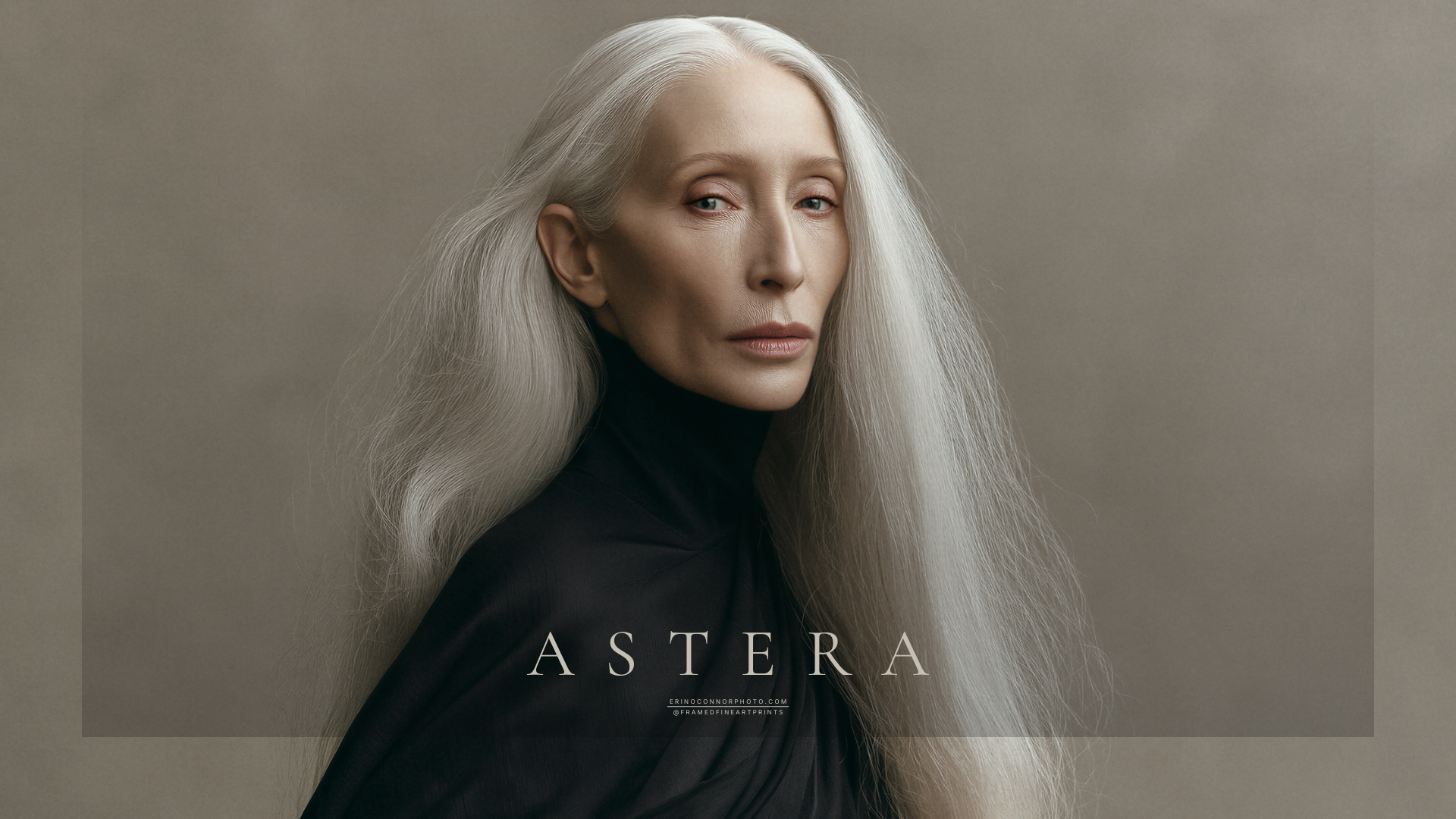
01 · LEARNING TO LOOK
I have spent most of my life looking at images of women.
A lifetime spent looking at images, and finally making the ones I wanted to see.
Some of my earliest memories of art are inseparable from my mother. She loved museums and galleries and took me to them throughout my childhood, teaching me, without ever formally calling it a lesson, that looking at art was something worth doing slowly and often.
Over the years she also began giving me framed prints of female portraits. They became part of the rooms I lived in and, eventually, part of the visual language I carried with me.
Long before I understood what my professional life would become, I was already surrounded by women in frames.
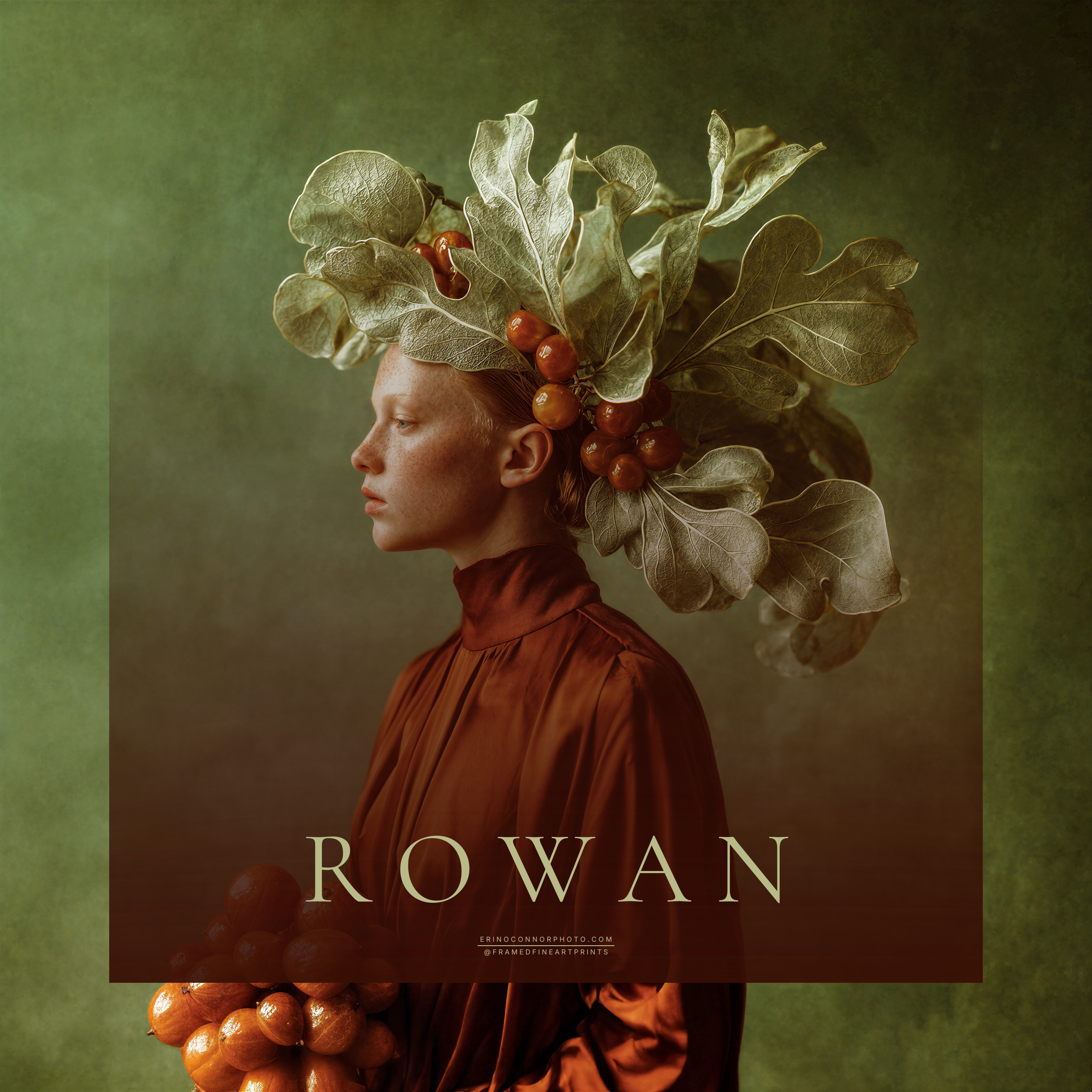
02 · A LIFE WITH IMAGES
That language eventually became my professional life.
I went on to study art history as an undergraduate and later earned a graduate degree in art history and curatorial studies. I worked as a curator, became a photographer, and ultimately spent many years as a professional retoucher.
My life with images has taken many forms. I have studied them, interpreted them, selected them, exhibited them, photographed them, manipulated them, repaired them, perfected them, and helped other people bring their visual ideas into being.
For much of my career, however, I was working in service of someone else's image.
03 · THE IMAGINARY STUDIO
As a photographer, there were always practical boundaries around what I could make. The photographs I was most drawn to often required worlds I could imagine but could not realistically produce: extraordinary clothing, elaborate styling, specialized hair and makeup, carefully cast models, custom sets, unusual locations, lighting crews, assistants, designers, props, and budgets substantial enough to bring all of those elements together.
As a retoucher, I often found myself thinking about the images I wished would arrive on my screen. I knew what I wanted to work on. I knew the kinds of faces, textures, fabrics, colors, gestures, and atmospheres that excited me.
But a retoucher does not choose what is photographed.
You inherit someone else's production and someone else's vision.

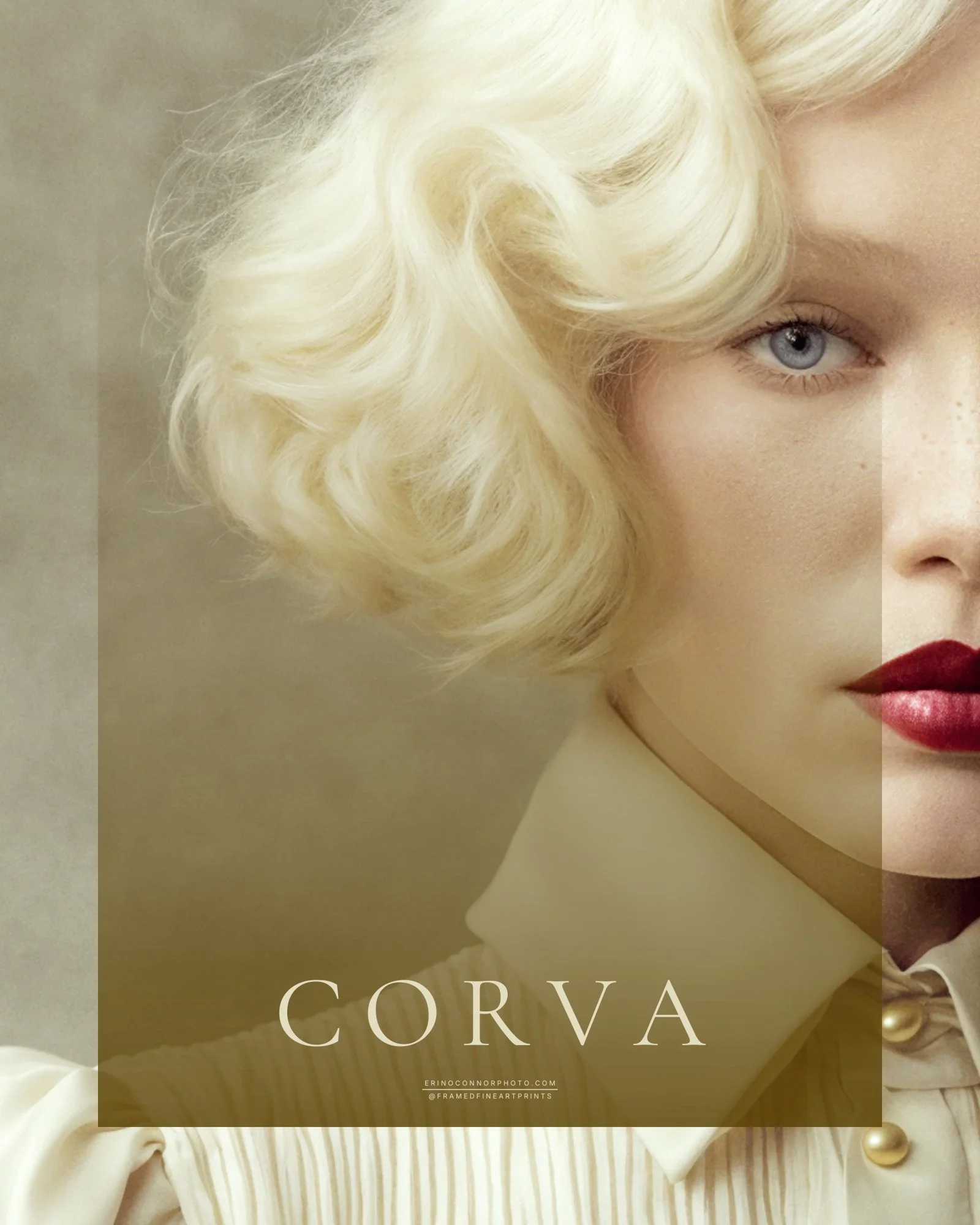
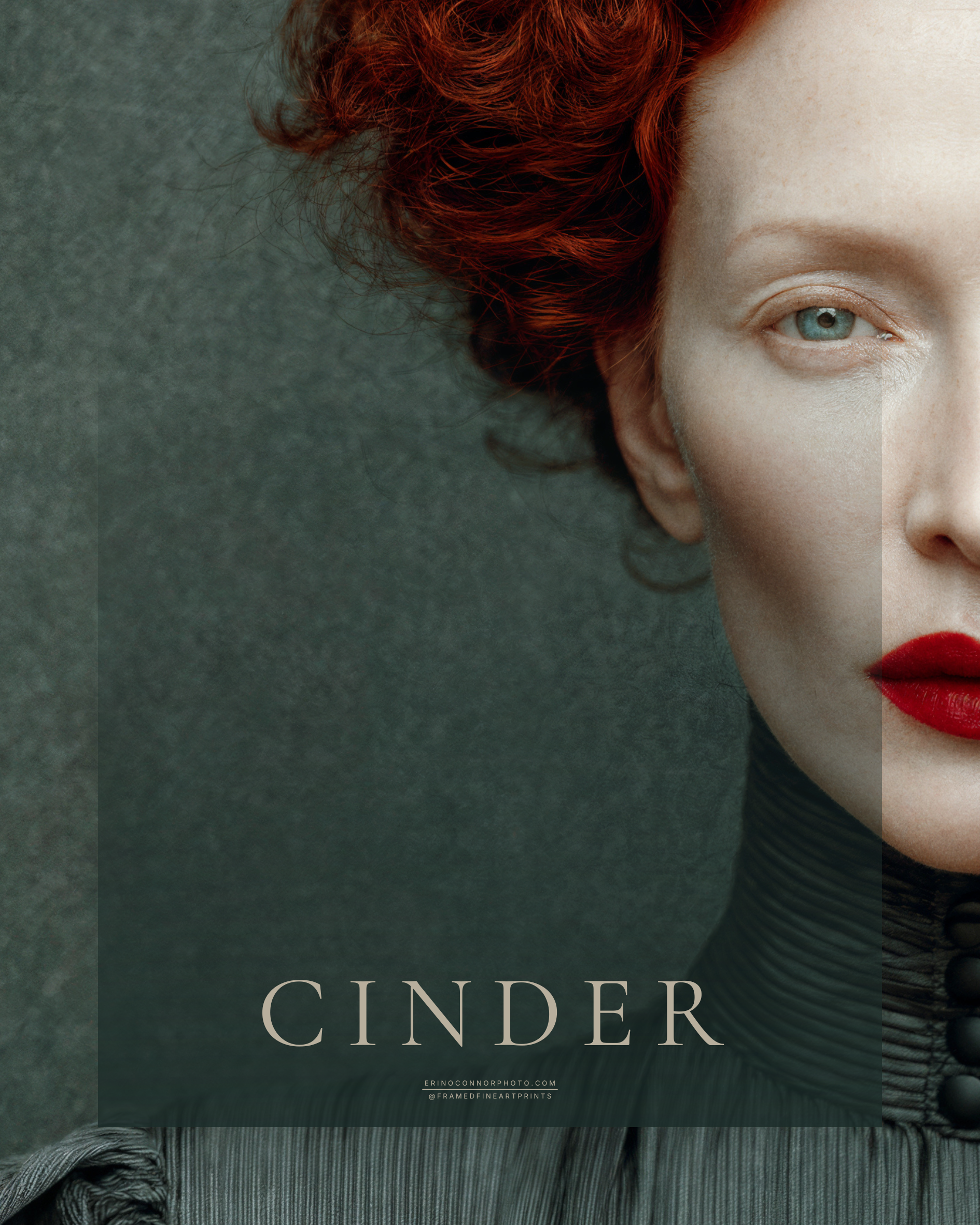
04 · THE PICTURES I WANTED
These portraits began, in part, as an answer to that longing.
They are the photographs I would want to shoot if I had access to everything.
They are the images I would want to retouch if I could choose exactly what appeared in front of me.
And, perhaps most importantly, they are images I am making for myself.
That distinction has become increasingly meaningful to me. Creative work has been my profession for decades, but professional creativity and personal creativity are not always the same thing.
Much of a creative career is necessarily responsive. There is a client, an assignment, a deadline, a product, a campaign, an expectation, or another person's vision at the center of the process.
Here there is no client.
There is only the question:
WHAT DO I WANT TO SEE?
05 · MAKING THE WOMEN
Artificial intelligence unexpectedly gave me a way to begin answering that question.
It has become one component of a much larger digital image-making process through which I can imagine a woman, construct her visual world, and then continue working on the image using the skills and instincts I have accumulated across art history, curating, photography, and retouching.
I consider composition, costume, gesture, color, symbolism, surface, historical reference, expression, and atmosphere. I refine and manipulate the resulting images until they feel less like possibilities generated by a tool and more like inhabitants of a world I recognize as my own.
Then I name them.
And increasingly, I give them stories.
06 · THE PORTRAIT ARCHIVE
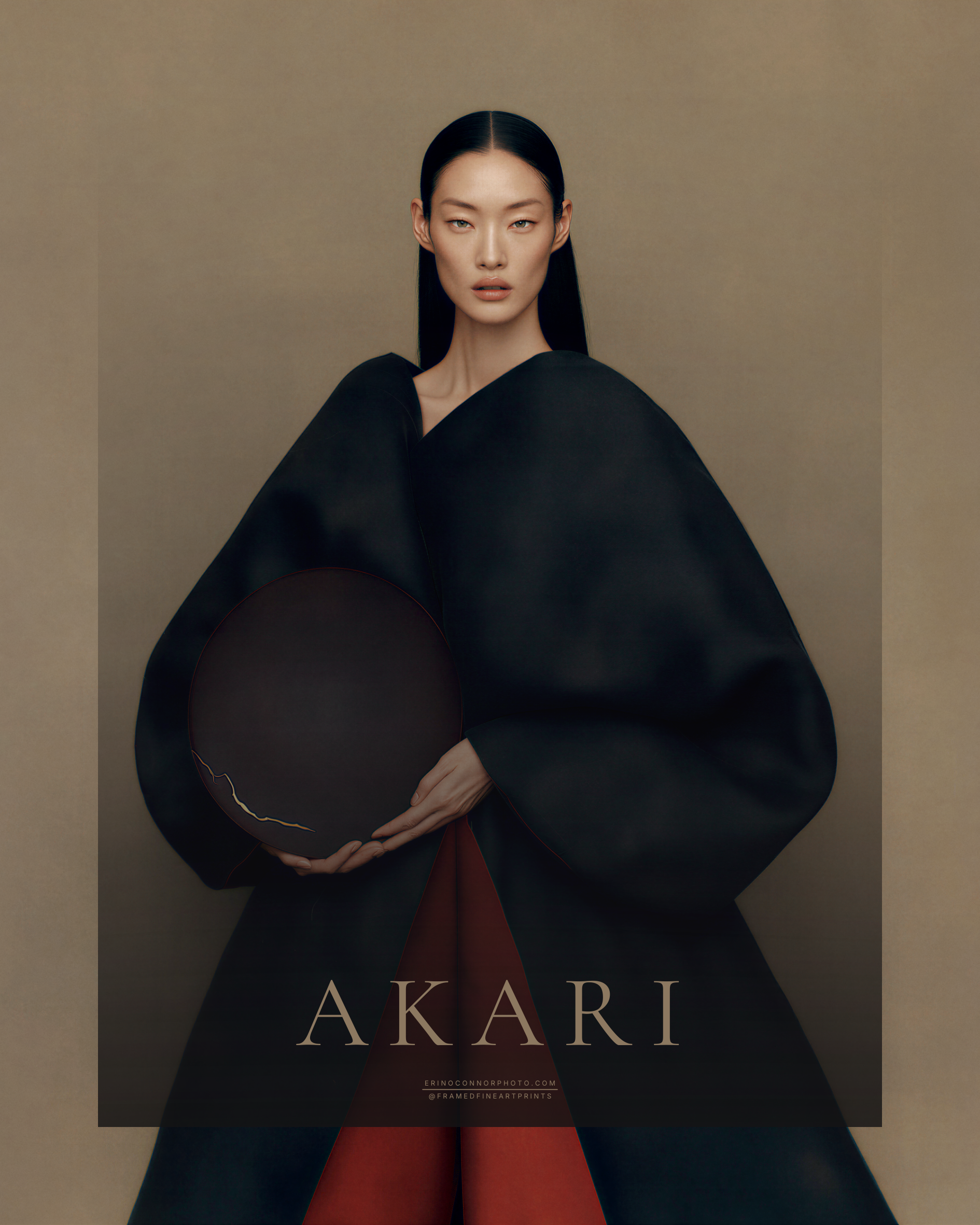
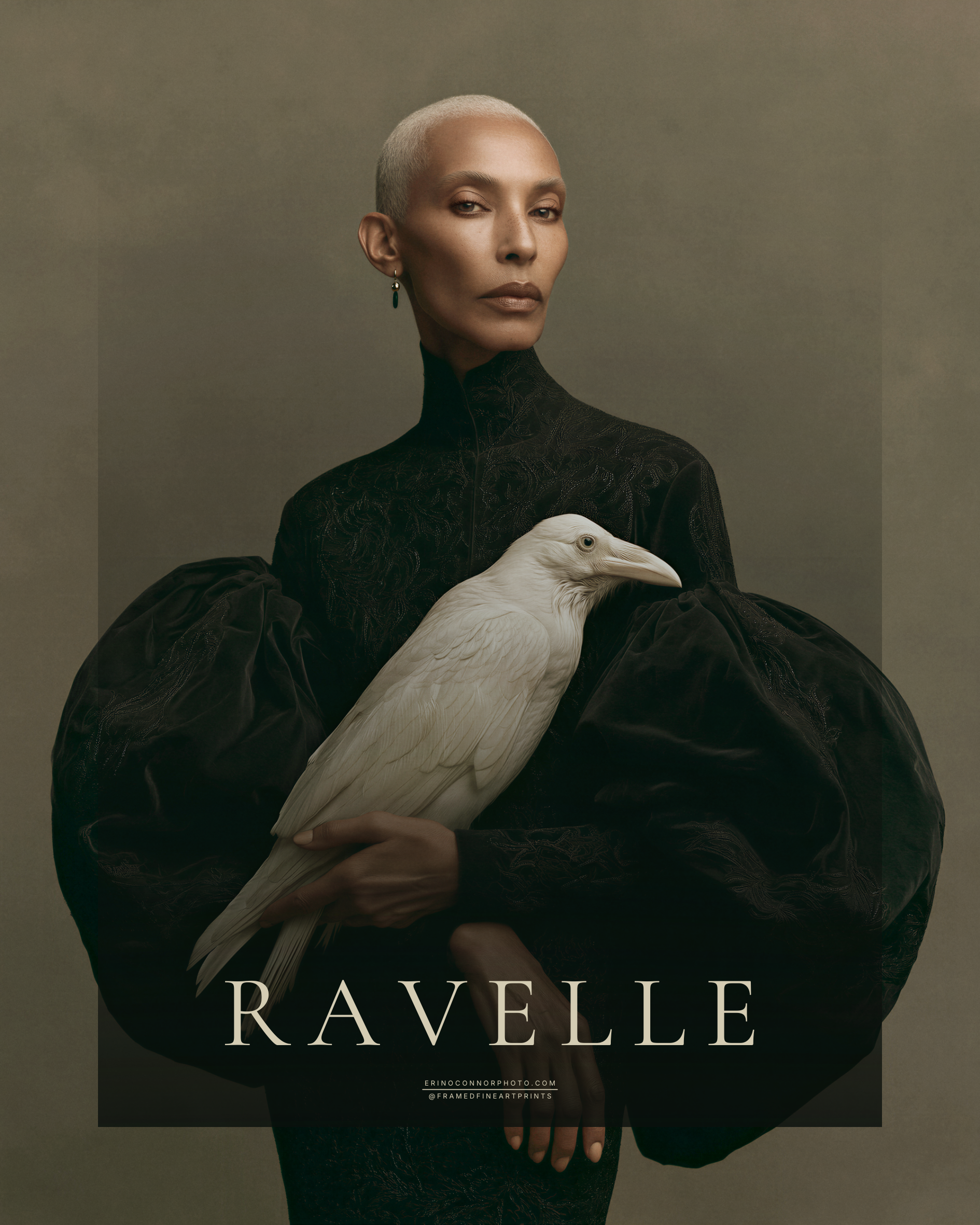
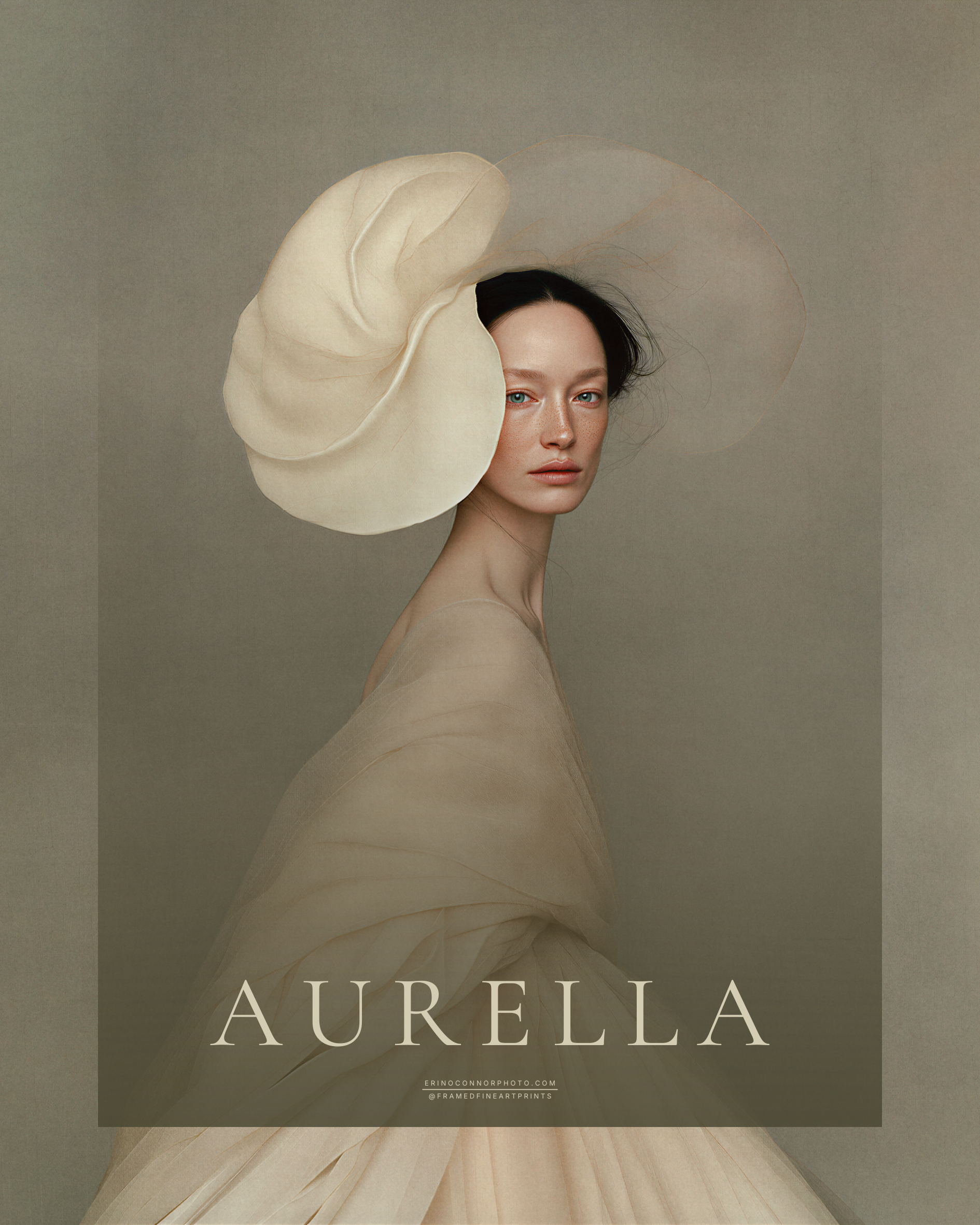
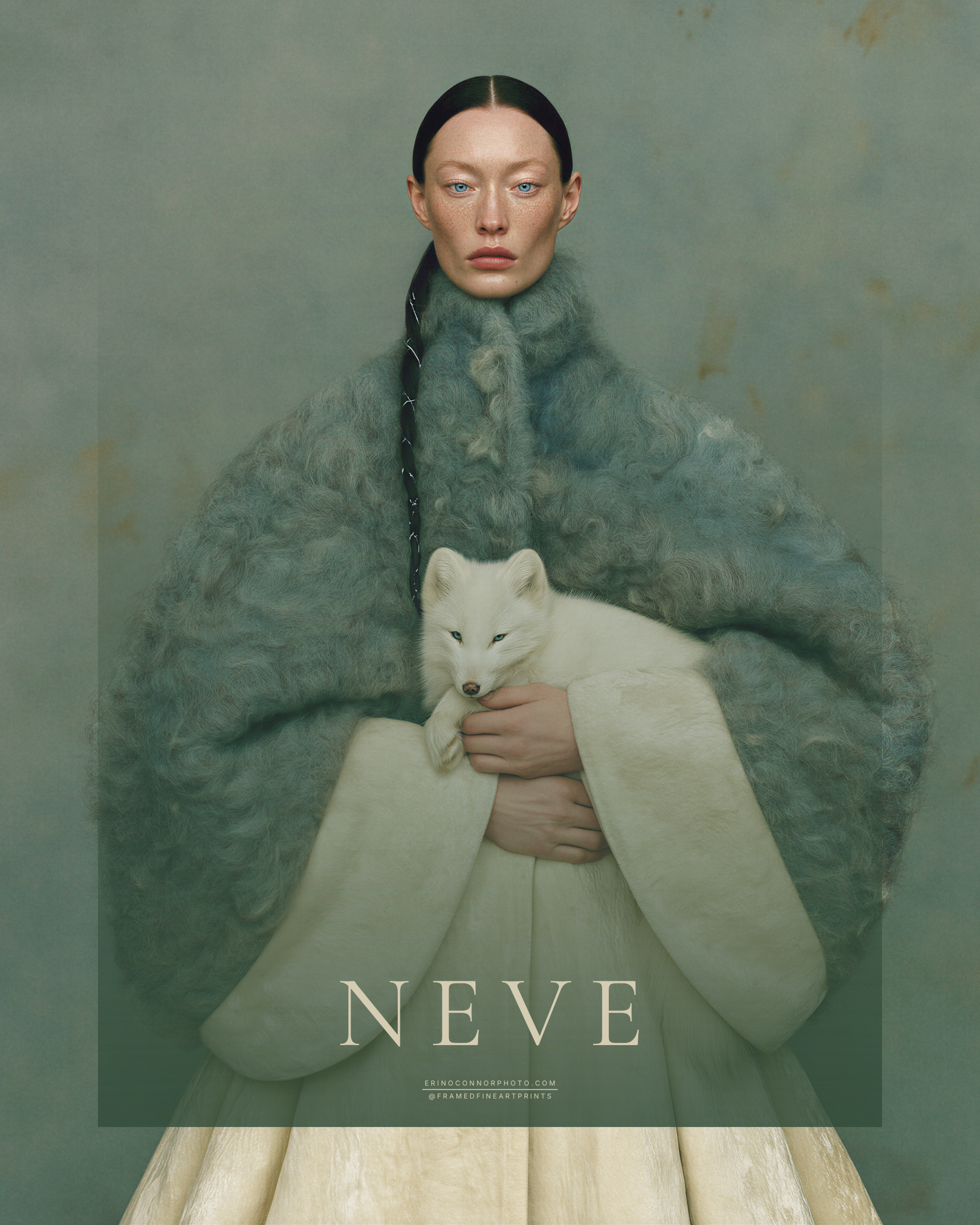
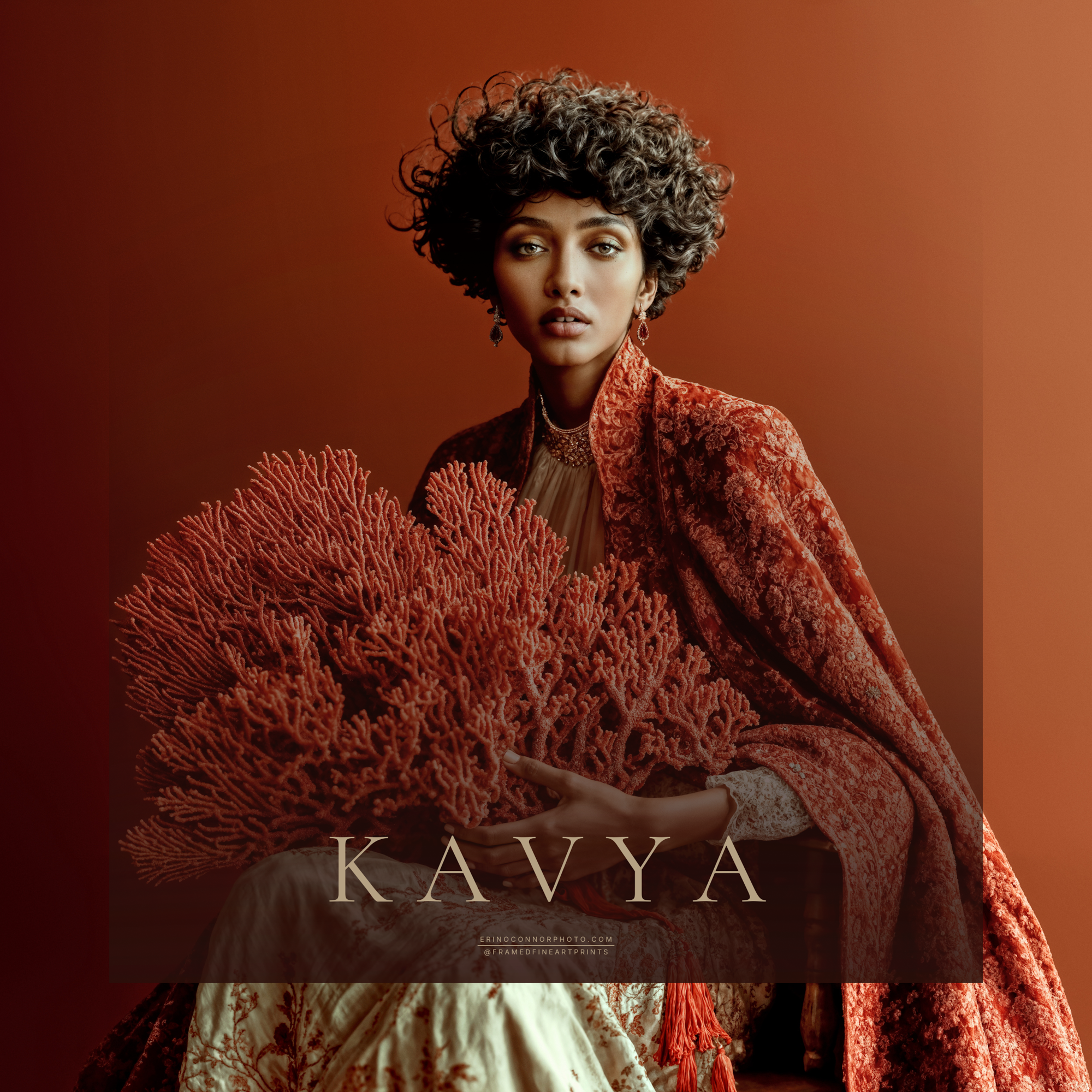
Each woman enters a larger portrait archive in which beauty is rarely only about beauty.
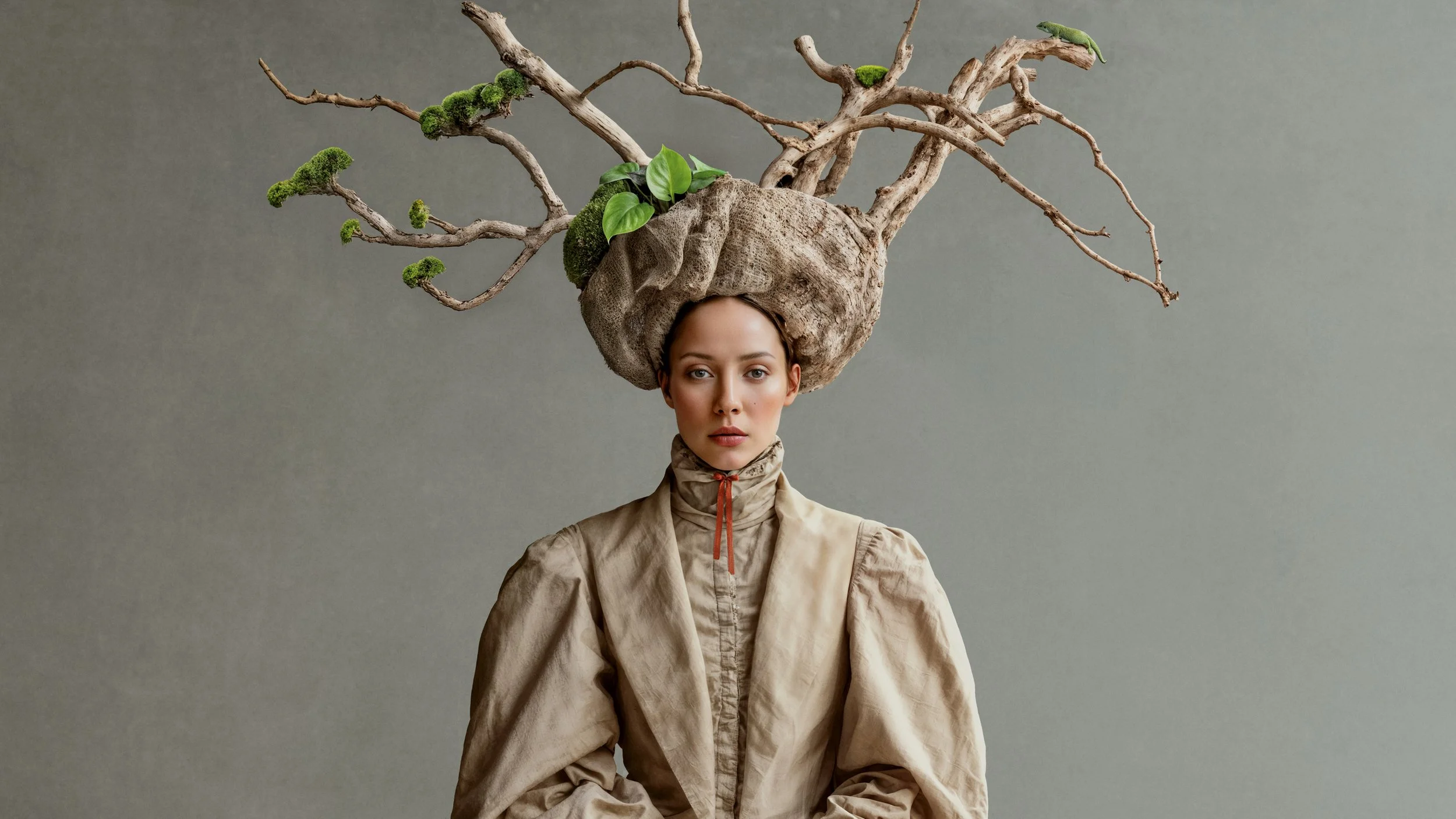
Clothing, flowers, animals, objects, gesture, color, and setting become carriers of meaning. Some of these meanings are invented for the character. Others inevitably come from me: from things I have studied, things I have loved, things I have lost, things I remember, and questions I continue to carry.
In this sense, the portraits are fictional, but they are also deeply autobiographical.
Not because any one of these women is meant to represent me, but because the collection contains the residue of a lifetime spent looking.
It contains the child walking through museums with her mother.
The art-history student learning how images accumulate meaning.
The curator thinking about relationships between objects and the narratives created by placing one work beside another.
The photographer studying light and gesture.
The retoucher concentrating on the smallest transitions of color, texture, edge, and skin.
And now the artist wondering what happens when all of those ways of seeing are finally allowed to belong to the same practice.
07 · THE CONTRADICTION
MY RELATIONSHIP WITH ARTIFICIAL INTELLIGENCE IS PROFOUNDLY CONFLICTED.
I come from the very creative industries that generative technology is disrupting. I understand why many artists, photographers, illustrators, designers, writers, retouchers, and other creative professionals view it with anger or fear.
Questions surrounding how generative systems have been developed, whose work has contributed to them, and how they may be used to reduce or replace creative labor are not abstract questions to me.
I have watched technology change the economic value of skills I spent decades developing.
In some ways, AI feels implicated in taking something from me.
And yet it has also given me something.
That is the contradiction at the center of this work, and I do not know how to resolve it neatly.
08 · THE MATERIAL COST
I am also troubled by the physical infrastructure behind these technologies: the enormous computational systems, the energy and water they require, the land and resources involved in building and operating data centers, and the complicated relationships between private technology companies, public resources, taxation, and the communities that host this infrastructure.
It is difficult to love a creative process while questioning some of the systems that make it possible.
I do not want to pretend that difficulty does not exist simply because I find the act of making these portraits joyful.
Nor do I want to construct an argument in which my personal creativity somehow excuses every consequence of the technology I use.
I cannot make that argument honestly.
09 · WHAT IT HAS GIVEN ME
What I can say is that, after a lifetime spent around images, I have unexpectedly found a way of making work that feels intensely personal to me.
For the first time, I can enter the imaginary studio that has always existed in my head.
I can choose the woman. I can choose what she wears. I can decide where she stands, what she holds, what the light feels like, what century seems to echo through her clothing, whether the image should feel quiet or theatrical, tender or unsettling, contemporary or impossible to place in time.
I CAN MAKE THE PICTURE I WISH EXISTED.
10 · OCCUPYING THE CONTRADICTION
That experience has been extraordinarily difficult for me to dismiss, even when I am uncomfortable with the tool that helped make it possible.
Perhaps that discomfort should remain visible.
Both positions would feel dishonest.
I do not want to present myself as an evangelist for artificial intelligence, nor do I want to conceal its role in my work because acknowledging it may make the work more difficult for some people to accept.
I WOULD RATHER OCCUPY THE CONTRADICTION.
I can believe that artists deserve protection and respect while using a technology that raises serious questions about both.
I can be concerned about environmental and social costs while admitting that the technology has opened a creative door for me.
I can mourn changes within the profession through which I have supported myself while being exhilarated by the artistic freedom those same technological changes have unexpectedly allowed.
I can love making these images without insisting that the circumstances surrounding their creation are uncomplicated.
Maybe there is no entirely comfortable place to stand.
I am increasingly willing to let that uncertainty be part of the work.
11 · WHY I MAKE THEM
Because beneath the technology, beneath the professional history, and beneath all of these questions about what image-making is becoming, there is something much simpler happening.
I AM MAKING PICTURES BECAUSE I NEED TO SEE THEM.
I am making the women I have spent a lifetime searching for in photographs, paintings, fashion editorials, museum galleries, books, and the images that passed through my hands professionally.
I am making the photographs I could never afford to produce.
I am making the images I wished someone would send me to retouch.
I am making characters whose worlds I want to enter.
And after decades of helping other people make their pictures, I am allowing myself to make mine.
12 · RETURNING TO THE BEGINNING
There is a strange circularity in realizing that the collection returns me to where I began.
A mother took her daughter to museums.
She taught her to look.
She gave her framed portraits of women to hang on her walls.
The daughter spent a lifetime building a career around images.
And many years later, she began creating women of her own and placing them back inside frames.
I do not know whether I understood that connection when I started.
I understand it now.
13 · WHAT REMAINS
These portraits are not simply images I sell. They are evidence of the way a life accumulates: childhood, education, work, technology, frustration, beauty, memory, curiosity, compromise, and desire all meeting inside a single frame.
They are also, at this point in my life, an assertion of authorship.
I have spent enough years behind other people's images.
I do not want to disappear behind these.
I want the work to carry my history with it. I want the questions and contradictions to remain visible.
I want people who encounter these women to understand that there is a person behind them who has spent a lifetime learning how to look, and who is still trying to understand what it means to make an image now.
MOST OF ALL, I WANT TO LEAVE SOMETHING OF MYSELF HERE.
Perhaps that is what I have been trying to do all along.
THE PORTRAIT ARCHIVE
Meet the Women
Explore the portraits, stories, symbols, and imagined histories that make up The Portrait Archive.
AVAILABLE TO COLLECT
Live With the Work
Selected works from The Portrait Archive are available as fine-art prints and custom framed prints.